

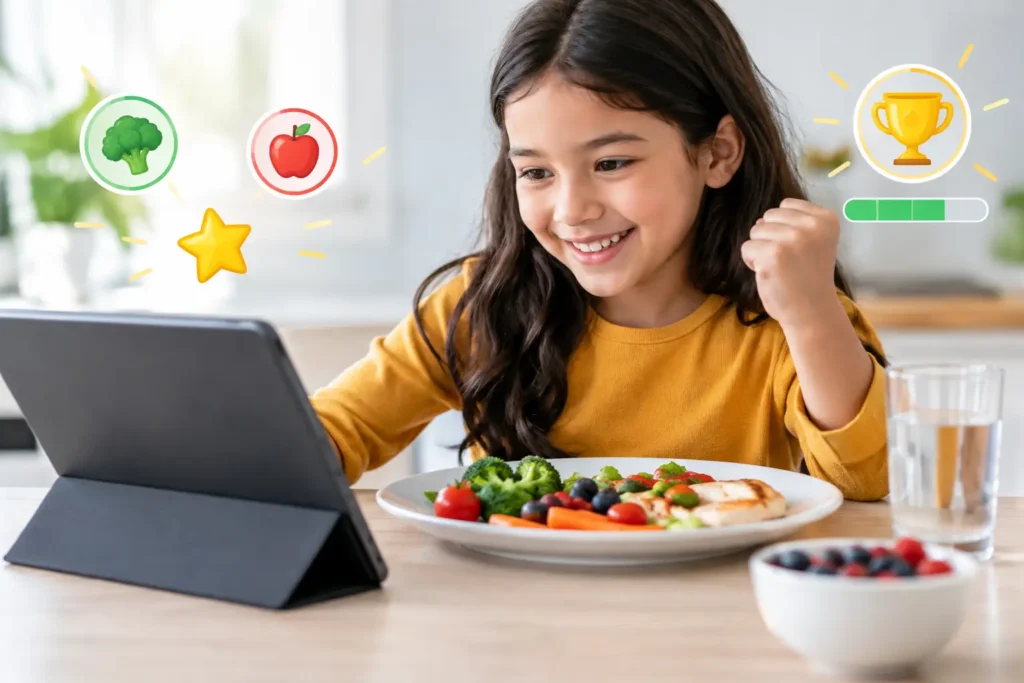
The broccoli has been on the plate for 20 minutes. Your child has negotiated, hidden, complained, and asked for a snack instead. You are tired, they are upset, and nobody feels like a winner. That is exactly why child nutrition gamification trends are getting parents’ attention: they turn the smallest food step into something a child can actually want to do.
The goal is not to make children perform for dessert or force them to clean their plates. It is to bring play, progress, and positive attention back to a moment that may have become tense. For families navigating picky eating, that can mean fewer arguments and more chances for a child to build comfort with food one bite at a time.
Why child nutrition gamification trends are growing
Kids are naturally drawn to clear goals, colorful visuals, surprises, and celebration. Adults use progress bars to finish workouts, learn languages, and save money. Children respond to the same basic idea, especially when the task feels big or unfamiliar. A plate of new food can feel overwhelming. One small bite that reveals part of a picture can feel possible.
That difference matters at the dinner table. Traditional mealtime pressure often sounds like, “Just eat three bites,” or “You cannot leave until you try it.” Even when parents mean well, children can hear a demand. Gamification changes the emotional frame. Instead of being asked to prove something, a child gets to participate in a playful challenge.
The strongest trend is not about turning meals into a high-stakes competition. It is about making progress visible and giving kids a sense of choice. A child may choose which food to try first, watch a surprise appear after each bite, or earn a cheerful badge for showing bravery with a new texture. Those tiny moments can help shift the focus from refusal to curiosity.
The game elements that work best at mealtime
Not every game belongs at the table. The most helpful tools are quick, gentle, and connected to the behavior parents want to encourage: calmly engaging with food. They should not turn dinner into a loud distraction or make a child feel they have failed if they are not ready.
Bite-by-bite progress feels manageable
For a hesitant eater, “Eat your vegetables” is a huge ask. “Take one tiny explorer bite to reveal the next piece” is much smaller. Visible progress breaks an intimidating task into steps a child can understand.
This is why image reveals and simple progress trackers are especially effective. The reward arrives right after the action, while the child is still feeling proud. It also lets parents praise effort instead of volume. A single lick, smell, touch, or bite can be recognized as a real win when a child is working through food anxiety or strong preferences.
Surprises create curiosity without pressure
Children love to know what happens next. A hidden character, a silly animation, or a mystery image can give them a reason to take another step. The food is still the food, but the experience around it becomes lighter.
The key is keeping the surprise simple. If the app, timer, or reward becomes more exciting than the meal itself, it can pull attention away from hunger cues and family conversation. A brief reveal that happens after a bite is usually enough. Then the child can return to eating, talking, and noticing what the food tastes like.
Badges celebrate effort, not perfection
Badges work best when they recognize brave behavior: trying something new, sitting calmly, taking a first bite, or coming back to a food after saying no last week. They work less well when they become a scoreboard between siblings or a reason to chase endless rewards.
Try language that celebrates practice. “You were a texture tester tonight” lands differently than “You finally ate it.” The first message tells a child they can learn. The second can make them feel judged for how long it took.
Choice gives children a role
Picky eating often becomes a power struggle because children have very little control over what lands on their plate. Giving limited choices can lower resistance. They might choose whether to try a carrot or a cucumber first, select the game picture, or decide if their bite is pea-sized or bean-sized.
Parents still set the meal and offer the food. Children get a safe, age-appropriate way to participate. That balance can make a surprising difference for kids who push back simply because dinner feels like something being done to them.
What gamification should not become
A playful tool can support a peaceful meal, but it cannot solve every feeding challenge by itself. If a child has pain when eating, frequent choking or gagging, trouble gaining weight, extreme texture avoidance, or a very limited food range, it is wise to speak with a pediatrician or feeding specialist. Games can be encouraging, but they are not a replacement for clinical support when there is a deeper concern.
It also helps to avoid using games as a disguised threat. “No game until you eat five bites” can quickly recreate the same pressure parents are trying to leave behind. The game should make trying easier, not become another bargaining chip.
And there is no need to chase bigger and bigger rewards. Candy, extra screen time, or expensive prizes can make the food feel like an unpleasant obstacle standing between a child and what they really want. The best reward is often immediate and built into the experience: a fun reveal, a happy animation, a badge, and a parent who notices their courage.
How to use food games without creating more work
The best family tools are the ones you can use on a tired Tuesday. Keep the setup short. Offer one or two familiar foods alongside a small amount of a less familiar food, then let the game invite a low-pressure interaction.
Start with a goal your child can reach. For one child, that may be taking a bite. For another, it may be touching a new food with a fork or smelling a sauce. Small goals are not lowering the bar. They are building the confidence that makes future bites more likely.
Keep your response calm whether your child participates or not. If they take a bite, celebrate it warmly and move on. If they decline, avoid turning the moment into a debate. You can say, “That food will be here if you change your mind,” and continue with the meal. Repeated, pressure-free exposure still counts.
It can also help to use the game consistently for a short period rather than only bringing it out during a major standoff. When it becomes a familiar part of dinner, children are less likely to see it as a signal that they are in trouble for not eating.
The trend parents actually need: less conflict
The most promising child nutrition gamification trends are not about making every child love kale by Friday. They are about helping families create a better pattern around food. A child who feels safe trying one tiny bite today may be more willing to try two next month. A parent who does not have to plead, bribe, or threaten gets to enjoy dinner too.
Easy Eaters is built around that practical idea: each bite can reveal a surprise, build progress, and give kids a reason to keep going without turning the table into a battleground. It is playful enough for young children and simple enough for parents who do not need another complicated routine.
There will still be meals when your child rejects the chicken, asks for crackers, or decides a beloved food is suddenly suspicious. That is normal. Progress with picky eating rarely moves in a straight line. What matters is creating more moments where food feels safe, choices feel manageable, and effort gets noticed.
Tonight, choose one small win to look for. Maybe it is a smell, a touch, a tiny bite, or simply a calmer conversation. When dinner feels less like a fight, children have more room to surprise you.