

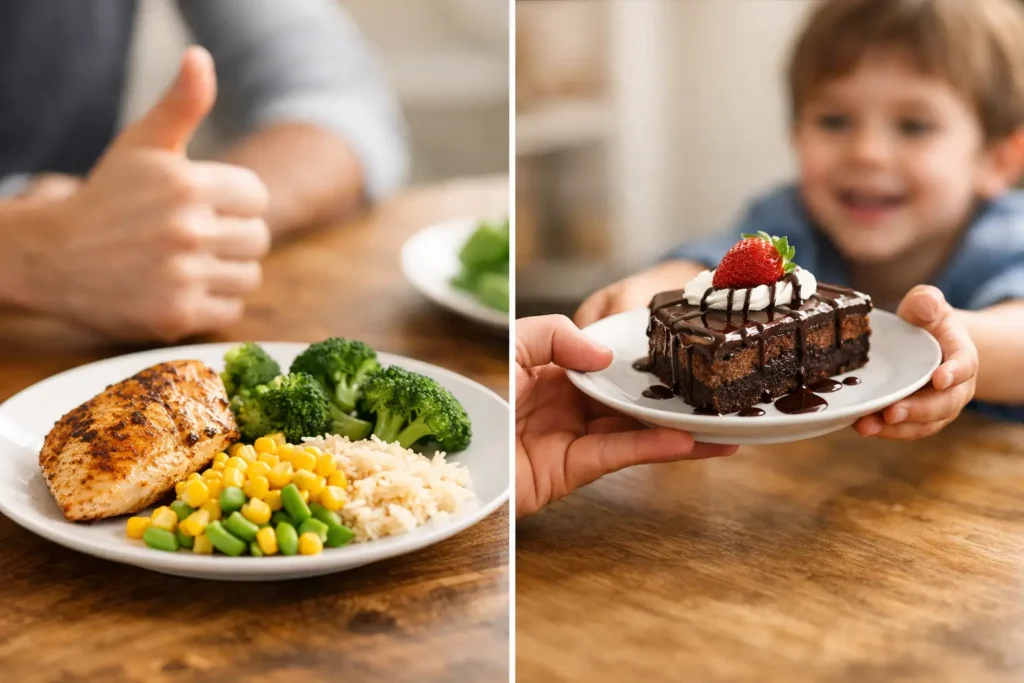
The difference between meal rewards versus dessert bribes can feel tiny when you are sitting across from a child who has eaten exactly two crackers and declared the chicken “too chicken-y.” But at a busy family dinner, that difference can change the entire mood. One approach turns the table into a negotiation. The other can give kids a cheerful reason to participate without making dessert the prize for obedience.
No parent sets out to make food stressful. Sometimes you just need your child to take one bite, stop crying, or let everyone finish a warm meal. “Three bites and then you can have ice cream” can seem like the quickest path to peace. The trouble is that it can accidentally teach a bigger lesson: dinner is the unpleasant chore, and dessert is the good stuff you have to earn.
There is a gentler way to encourage progress, even on the nights when everyone is tired.
Why Dessert Bribes Can Backfire
A dessert bribe usually sounds like a deal: “Eat your vegetables and then you get a cookie.” The child hears that the vegetable is a hurdle and the cookie is the real reward. For a picky eater who already feels wary around new foods, that message can make the unfamiliar food seem even less appealing.
It can also put parents in a tough position. What happens if your child eats two bites instead of three? Do you hold the line and risk a meltdown? Do you hand over the cookie anyway and feel like the rule means nothing? Before long, dinner can become a courtroom where every bite is debated.
This does not mean dessert is bad, or that serving a sweet food makes you a less thoughtful parent. Dessert can simply be food. Families have different routines, cultures, budgets, and needs. A cookie after dinner can be fun. The problem is when it becomes the bargaining chip that carries all the pressure.
Kids are wonderfully observant. If dessert only appears as payment for eating something else, it can become more exciting and powerful than it needs to be. Meanwhile, the foods you hope they will learn to accept may become associated with tension, bargaining, and a parent watching every bite.
Meal Rewards Versus Dessert Bribes: The Key Difference
A meal reward does not have to mean rewarding a child with food. In fact, the most helpful rewards often have nothing to do with eating a separate treat. They focus on the experience of trying, participating, and making a small step forward.
Think of the difference this way. A bribe says, “Do this thing you do not want to do, and I will give you the thing you really want.” A supportive meal reward says, “You are making progress, and we can make that progress feel fun.”
That might look like revealing a silly picture after each bite, adding a sticker to a progress chart, choosing a family dance song after dinner, or earning a badge for being a brave taster. The food is not framed as a punishment that must be endured. The child gets a playful moment while practicing a new skill.
The goal is not to trick children into eating everything on their plates. It is to lower the emotional temperature around food. When a child takes one tiny bite of a new strawberry, touches a piece of broccoli, or calmly keeps an unfamiliar food on their plate, those can all be real wins.
Keep the Goal Small Enough to Win
When picky eating has been hard for a while, asking for a clean plate is a giant mountain. Asking for one comfortable, age-appropriate step is far more manageable. Your child may be ready to look at a new food, smell it, touch it with a fork, lick it, or take a pea-sized taste. Those steps count because they build familiarity without forcing a dramatic moment.
Small goals also protect the relationship. Instead of saying, “You have to eat five bites,” try a calm invitation: “Want to see if you can do one explorer bite to reveal the next surprise?” Your child still has room to say no, and you do not have to turn the answer into a showdown.
This is where a bite-based game can be especially helpful. Easy Eaters turns each bite into visible progress, with image reveals, badges, and celebrations that give children something positive to focus on at the table. The excitement comes from the game, not from holding a brownie over their heads.
A playful reward is not magic, and it will not make every child suddenly love every food. Some children need many low-pressure exposures before a food feels safe. But it can make those repeated tries feel lighter for everyone.
Make the Reward About Participation, Not Perfection
The best meal rewards are clear, immediate, and low stakes. A young child does not need a complicated point system or a giant prize promised next Saturday. They need to see that their effort matters right now.
Try keeping the reward connected to a behavior you actually want to encourage: sitting with the family for a few minutes, interacting with a new food, taking a bite of a familiar food after a difficult day, or using a polite “no thank you” instead of yelling. These are all mealtime skills, not just eating skills.
Be careful not to move the finish line. If you celebrate one bite today but demand four bites tomorrow, your child may learn that cooperating only leads to more pressure. Consistency builds trust. If the agreed goal is one bite, let one bite be enough.
Your language matters, too. “You did it! You tried something new” feels very different from “Finally, you ate it.” Keep the attention on courage and curiosity rather than making your child feel watched or judged. A child who feels safe is more likely to come back to the table ready to try again.
What to Do When Your Child Asks for Dessert First
This is a common moment, and it does not require a perfect answer. You can decide what works for your family without making a speech about good food and bad food. A simple, neutral response is often enough: “Dessert is part of dinner tonight, and we are having it after we eat together.”
If your child protests, resist the urge to launch into a long negotiation. Acknowledge the feeling, hold your routine, and bring the focus back to the meal. “You really want the cookie. It is hard to wait. Right now, you can choose some pasta, carrots, or milk.”
On other nights, you may serve a small dessert alongside the meal. For some families, this takes away the mystery and urgency around sweets. For others, it creates more distraction. There is no one arrangement that fits every child. Notice what leaves your particular family calmer, rather than chasing a rule that makes dinner harder.
Build a Table Where Trying Feels Safe
Rewards work best when they are only one part of a relaxed routine. Serve at least one familiar food when you can. Keep portions small so a new food does not feel overwhelming. Let your child see you eat and enjoy a variety of foods, but skip comments like “See? Mommy eats it, so you should too.”
It also helps to separate your jobs from your child’s. You decide what is offered and when the meal happens. Your child gets to decide whether to eat and how much feels comfortable. That does not mean you have no influence. It means your influence comes from calm repetition, encouragement, and making room for tiny successes instead of forcing a finish.
Some nights will still be messy. Your child may reject the food, the game, and the very chair they are sitting in. That is normal. The win may simply be ending dinner without a power struggle. Peace at the table is not a smaller goal than nutrition. It is part of the foundation that helps eating get easier over time.
Tonight, choose one tiny goal your child can genuinely reach. Make it playful, celebrate the effort, and let the rest of dinner be just dinner. Those small, happy moments can add up to a child who feels more confident around food and a parent who can finally take a breath.