

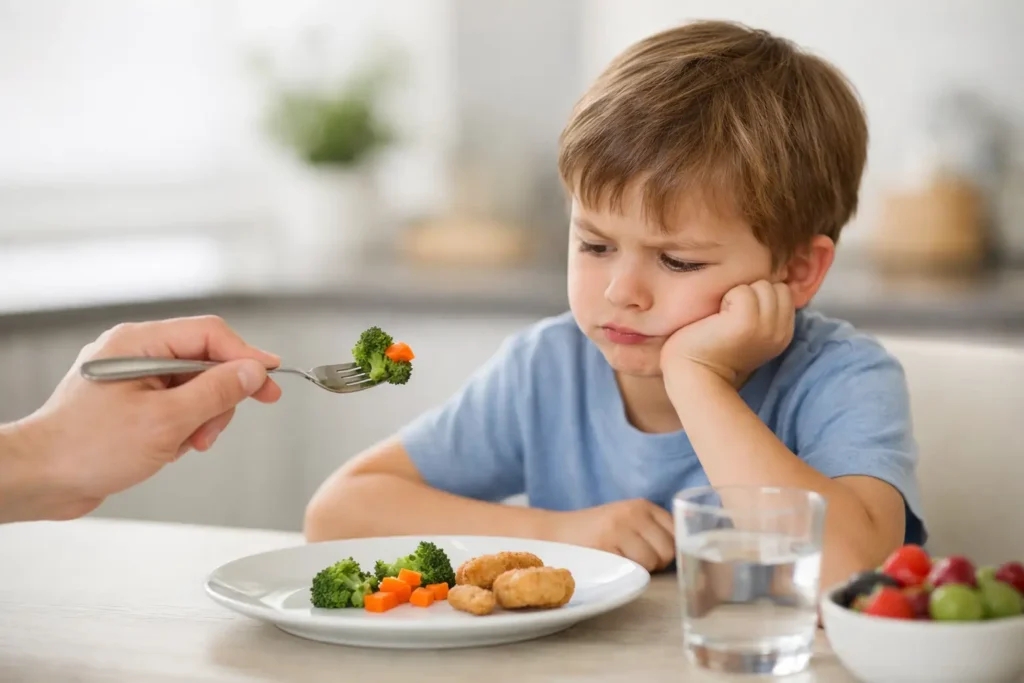
A child who has said “no” to dinner five times may suddenly lean in for one tiny bite when there is a fun goal on the screen. That little shift can feel like magic. But are bite goals safe for young picky eaters? They can be, when the goal stays playful, flexible, and completely free from pressure.
The difference matters. A bite goal should never mean “you must eat.” It can mean, “Want to help reveal the next silly picture?” It gives a hesitant child a reason to engage without turning dinner into a test. For many families, that makes trying food feel less scary and mealtime feel lighter.
What makes bite goals feel safe?
A safe bite goal respects the child at the table. Your job is to offer food, create a calm opportunity, and keep the tone warm. Your child still gets to listen to their body and decide whether they are hungry, full, ready, or not ready for another bite.
That means the goal is an invitation, not a requirement. It is okay if your child takes one bite and stops. It is okay if they decide to smell, touch, lick, or simply keep a new food on their plate today. Those are all steps toward familiarity, especially for a child who finds food changes overwhelming.
The best food games celebrate participation, not perfection. There is no lecture when a child says no, no disappointed face, and no reward held hostage until the plate is empty. The fun continues because connection matters more than a number.
When bite goals can become too much
Even a cheerful game can start to feel like pressure if the rules become rigid. If your child looks worried, rushes bites, gags, cries, hides food, or says they are full but feels they cannot stop, pause the game. Those are signs the goal may be asking for more than they can comfortably handle right now.
Be especially careful with language. “Just three more bites” can sound harmless, but it can teach a child to ignore fullness or make a disliked food feel like a hurdle. Try a softer approach instead: “Would you like to do one more bite, or are you all done with that food?” Either answer is acceptable.
A goal is also not a shortcut around every feeding challenge. Some children have strong sensory sensitivities, pain with eating, swallowing concerns, frequent coughing or choking, poor growth, or a very limited range of accepted foods. In those situations, a pediatrician or qualified feeding professional can help you understand what is going on. A game may still be enjoyable, but it should not replace individualized support.
Are bite goals safe for toddlers and younger kids?
They can be, with a few practical guardrails. First, make sure the food itself is safe for your child’s age and chewing skills. Serve small, manageable pieces and prepare foods in developmentally appropriate ways. Whole grapes, nuts, popcorn, hard raw vegetables, spoonfuls of nut butter, and other choking hazards need extra care or a safer alternative.
Second, stay close. A bite game is meant for seated meals with an attentive adult nearby, not for eating while walking, playing, riding in the car, or laughing with a mouth full of food. Keep the excitement gentle enough that your child can chew and swallow at their own pace.
Third, start small. For a child who avoids a food, the goal might be one tiny taste, not several full bites. For another child, it may be putting a cucumber on their plate or dipping a cracker into hummus. Small wins count because they build confidence without creating a showdown.
How to use bite goals without bribery
Parents often worry that a food game will become another bribe. The distinction is in the feeling and the expectation. A bribe usually says, “Eat this food and then you get something better.” It can make the food feel like an unpleasant chore and the reward feel like the real prize.
A playful bite goal works differently. The game happens alongside the meal, and the reward is part of the experience itself: a hidden image appears, a character celebrates, or a child earns a badge for being brave enough to try. The focus is on curiosity and effort, not on forcing a certain amount of food into a child’s body.
Easy Eaters is designed around that gentler idea. Each bite can reveal a visual surprise and create a little moment of celebration, helping children stay engaged without parents needing to bargain, threaten, or negotiate through dinner.
Still, flexibility is the secret ingredient. If your child is tired, sick, overstimulated, or simply not hungry, skip the goal. You do not need to “finish the game.” A calm meal where everyone leaves the table feeling okay is a win.
A simple way to set a healthy bite goal
Before dinner, choose a goal that feels almost too easy. If your child already likes pasta but avoids vegetables, do not make the goal five bites of broccoli. Place a familiar food on the plate, add one tiny piece of the newer food, and let the game offer a low-stakes nudge.
You might say, “This is your explorer bite. You can decide if you want to try it.” If they do, celebrate the attempt with genuine warmth: “You gave it a try! That was brave.” Avoid making a big deal of whether they liked it. Liking a food can take many exposures, and children do not need to pretend otherwise to make you happy.
If they decline, stay neutral. “Okay, maybe another time.” That calm response protects trust. It also keeps the food from becoming emotionally loaded, which gives you a better chance of seeing progress over time.
Let hunger and fullness stay in charge
Children are still learning what hunger and fullness feel like. Bite goals should support that learning, not override it. Encourage your child to notice their body with simple questions such as, “Is your tummy still hungry?” or “Do you feel full, or do you want another bite?”
Avoid tying a goal to dessert, screen time, or leaving the table. Those rules can turn normal appetite changes into a power struggle. Some days your child may eat more; other days, barely anything. That is common, especially in the toddler and preschool years.
Instead of tracking every bite as proof of success, look for the quieter changes: less tension when a new food appears, a willingness to keep it on the plate, a curious touch, or one taste without tears. Those moments are the foundation of a more confident eater.
Keep the game smaller than the relationship
When dinner has been hard for a long time, it is tempting to make every meal an opportunity to fix picky eating. That is a lot of pressure for both of you. Bite goals work best when they are one playful tool, not the entire emotional weight of the meal.
Serve foods your child knows alongside foods they are learning about. Let conversation include school, dinosaurs, weekend plans, and funny family stories. Some nights the game will spark a proud new taste. Other nights, it may simply help everyone get through dinner with fewer tears. Both outcomes matter.
The safest goal is one your child can walk away from feeling capable, heard, and welcome at the table. Keep it light, notice the tiny brave moments, and let tomorrow offer another chance to play.