

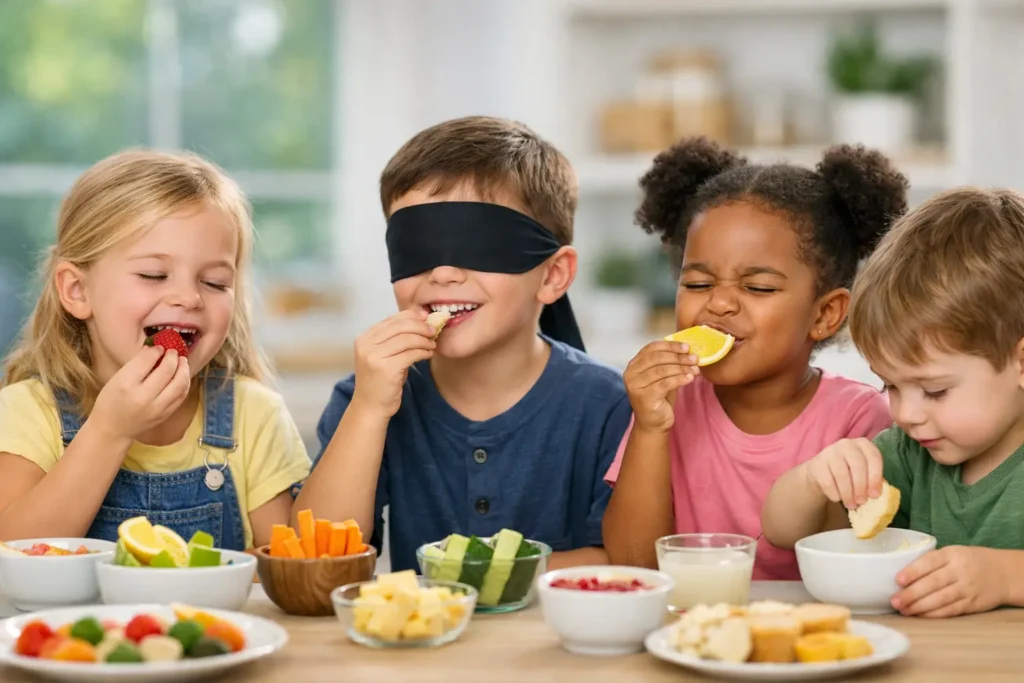
A child who says “yuck” before a carrot reaches their plate is not trying to ruin dinner. They may be unsure about the color, smell, texture, or simple unfamiliarity of that food. The best tasting activities children can try turn that uncertainty into a small, playful experiment – with no speeches, bargaining, or pressure to clean the plate.
For parents of picky eaters, the goal is not to make a child suddenly love every food. It is to make trying feel safe. A lick, sniff, tiny bite, or even a curious look can be a real win. These easy activities give children a little control while helping food feel less like a battle.
Why Tasting Games Can Change the Mood at Meals
Children learn through play. When food becomes a color hunt, a detective challenge, or a silly taste test, the focus shifts away from “You have to eat this.” Instead, it becomes “What do you notice?” That is a much easier invitation to accept.
Keep the stakes low. Offer familiar foods alongside one new or less-loved food, use truly tiny portions, and let your child decide how far they go. A child who touches a blueberry today may taste one next week. That is progress, not failure.
There is one important trade-off: games should make meals lighter, not turn every dinner into a performance. Choose one activity at a time and use it when the table needs a reset. On busy nights, a calm plate and a simple question are more than enough.
10 Best Tasting Activities for Children
1. The Rainbow Taste Hunt
Put two or three foods of different colors on the plate and invite your child to find a color. “Can you find something red?” is often less intimidating than “Please try the tomato.”
Start with colors your child already enjoys, such as yellow banana, orange cheese, or red strawberries. Then add one new option nearby. The game is about noticing first. Eating can come later.
2. Tiny Bite, Big Mission
Give a tiny taste a playful name: mouse bite, dinosaur nibble, fairy bite, or superhero crunch. The portion should be genuinely small – smaller than many parents expect. A large bite can feel like a big demand to a cautious eater.
Ask, “Do you want to take a mouse bite or just give it a kiss with your lips?” Both choices count as participation. When children have a choice, they are more likely to stay relaxed and curious.
3. Food Detective
Invite your child to investigate food like a detective before anyone takes a bite. What color is it? Is it smooth, bumpy, wet, crunchy, warm, or cold? Does it smell sweet or earthy?
This activity is especially helpful for children who resist a food on sight. It gives them permission to engage without being expected to eat. Try saying, “We are not deciding if we like it yet. We are just collecting clues.”
4. The Crunch or Squish Test
Texture can be the biggest obstacle for a picky eater. Put out foods with clear differences, such as crackers and cucumber slices, yogurt and applesauce, or toast and avocado. Ask your child which foods crunch, squish, stretch, or melt.
You may learn that your child is not rejecting vegetables as a category. They may simply dislike soft cooked vegetables but enjoy crisp raw ones. That small insight can save everyone frustration at future meals.
5. Dip It If You Want To
A familiar dip can make a new food feel less lonely. Offer a small amount of ranch, hummus, yogurt dip, guacamole, ketchup, or another family favorite next to a new food. Let your child choose whether to dip.
The dip is not a trick or a bribe. It is a bridge. If a carrot only gets licked through a layer of hummus, your child has still had a positive interaction with the carrot.
6. The Three-Taste Vote
Place three small foods in front of your child, including at least one safe favorite. After tasting, smelling, or touching each one, they can vote: thumbs up, thumbs sideways, or thumbs down.
A sideways thumb is powerful. It means “not yet,” not “never.” Help your child see that tastes can change. You can say, “You do not have to love it today. We can try it another time.”
7. Mystery Food Under the Cup
Cover a tiny piece of food with an upside-down cup or bowl. Let your child lift it and see what is hiding underneath. The surprise is often enough to create interest, especially with familiar foods that have been cut into fun shapes.
Keep mystery foods low-risk. A surprise is fun only when your child trusts that they will not be pressured to eat something frightening or strongly flavored. Save intense foods for another day.
8. Build a Snack Face
Use slices, small pieces, and spreads to create a funny face on a plate or cracker. Cucumber eyes, a pepper smile, berry hair, and a yogurt beard can turn food into a creative project.
The point is not to make a picture-perfect snack. Let your child place the food, rearrange it, and decide which piece gets tasted first. Handling food is part of getting comfortable with it.
9. Same Food, New Shape
Some children need repeated exposure, but repetition does not have to feel repetitive. Serve the same food in a different shape or format: apple slices instead of cubes, roasted sweet potato rounds instead of fries, or peas mixed into a simple rice dish rather than served alone.
Be honest about what the food is. Sneaking food can damage trust if a child discovers it later. A new shape or preparation is not a disguise. It is a fresh chance to explore.
10. Reveal a Surprise, Bite by Bite
For some kids, a visual goal makes tasting feel exciting. A simple image-reveal game can let a child uncover part of a silly picture after each bite they choose to take. The reward is the fun of seeing what appears next, not candy or a promise of dessert.
This is the playful idea behind Easy Eaters: each bite helps reveal an image, earn a badge, or trigger a little celebration. It gives children a reason to participate while keeping the parent’s message calm and positive: “You are in charge of your body. Let’s see what you want to try.”
How to Keep Tasting Activities Pressure-Free
The words you use matter as much as the activity. Try to describe instead of persuade. “That pepper made a loud crunch,” feels easier to hear than “See? It is good!” Avoid turning one taste into a promise that your child must finish the serving.
It also helps to separate trying from liking. A child can be brave enough to taste broccoli and still decide it is not for them today. Celebrate the brave part: “You tried something new. That was a strong choice.” This keeps the door open for another attempt.
If your child is hungry, tired, sick, or already upset, skip the game. Serving familiar food without comment can be the kindest choice. Tasting activities work best when they are invitations, not another task a child has to complete.
Make Small Wins the Family Habit
Pick one activity for the week and repeat it gently. Maybe Tuesday is rainbow night, or maybe the family gives one food a thumbs-sideways vote at dinner. Predictable little rituals are easier for children than big food challenges.
You do not need a perfect plate, a perfectly behaved child, or a meal filled with new foods to move forward. One curious sniff. One food touched. One tiny mouse bite. Those moments can slowly replace tense dinner negotiations with confidence – for your child and for you.