

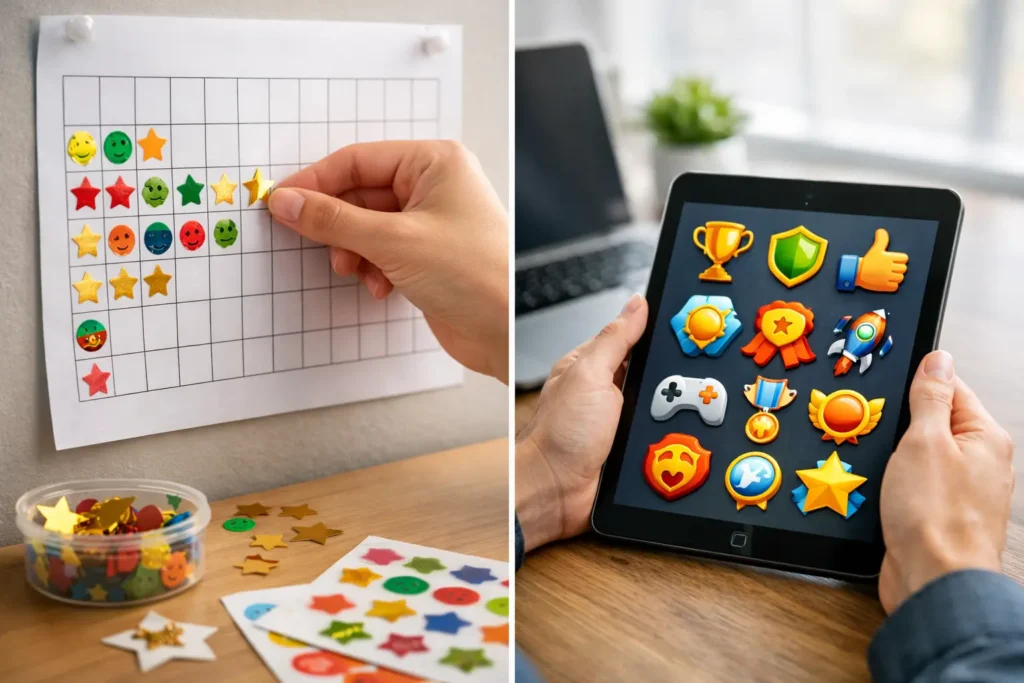
The sticker sheet is on the fridge. Your child has earned three shiny stars, then suddenly refuses the fourth bite because the broccoli is “too green.” If this scene feels familiar, you are not failing – you are parenting a young child with big feelings and very firm opinions about food. When weighing sticker charts versus digital badges, the better choice is not simply the one with the flashiest reward. It is the one that keeps the focus on small, pressure-free wins at the table.
For many families, a reward tool can turn a tense moment into a more playful one. The trick is using it as encouragement, not as a bargaining chip. Here is how sticker charts and digital badges compare when your goal is fewer dinner battles, more brave bites, and a calmer experience for everyone.
Why rewards can help picky eaters try
Picky eating is rarely solved by one magical meal or one perfectly worded request. Children often need repeated, low-pressure exposure before a new food feels safe. A reward system can make that process feel more predictable and fun.
The reward should celebrate participation: sitting with the family, touching a new food, smelling it, licking it, or taking a tiny bite. Those are real steps forward. When kids feel noticed for trying, rather than judged for finishing, they are more likely to come back to the table tomorrow willing to try again.
That distinction matters. “Eat three bites and then you get dessert” can quickly become a negotiation. “Every brave bite reveals something fun” makes the moment itself more engaging. The food is still there, the child still has choice, and the mood stays lighter.
Sticker charts versus digital badges at dinner
Both tools offer a visual way for children to see progress. But they create different experiences, especially when dinner is already running late and everyone is tired.
What sticker charts do well
Sticker charts are simple, familiar, and wonderfully tangible. A preschooler can choose a dinosaur sticker, place it in a square, and feel proud right away. For a child who loves crafts or responds well to routines, that physical ritual can be motivating.
They also work without a phone, battery, or internet connection. You can keep one on the refrigerator or tuck it into a meal planner. For some families, that visible reminder helps a child remember their goal from one day to the next.
Still, sticker charts can become a little awkward at the table. You may need to find the chart, locate a sticker, decide what earned it, and manage disappointment if a child wants five stickers instead of one. A chart can also feel slow. If the big prize sits at the end of 20 boxes, a young child may not connect tonight’s tiny bite with a reward that feels far away.
What digital badges do well
Digital badges can make progress immediate. A child takes a bite, taps to record it, sees an image reveal or a cheerful celebration, and understands that their effort counted. That fast feedback is especially helpful for children ages 2 to 8, who tend to live very much in the moment.
A digital system can also keep the experience fresh. Instead of earning the same gold star every night, children may collect different badges, reveal surprise pictures, or watch a progress meter fill up bite by bite. Variety can matter when you are asking a cautious eater to practice something that feels hard.
Because the reward happens right at the point of effort, parents do not have to stop dinner to set up the next step. The conversation can stay warm and simple: “You tried it. Look what you revealed!” That is a very different energy from counting bites, debating rules, or reminding a child what they have not done.
There is a trade-off, of course. Some parents understandably want less screen time, not another device at the table. A digital badge tool works best when it is brief and purposeful – a quick interactive celebration, not a replacement for family conversation or an endless distraction. The phone is there to support the meal, then it can go away.
Which option is right for your child?
It depends on what helps your child feel capable. A sticker chart may be a great fit for a child who loves collecting things, enjoys a predictable routine, and does not need an instant payoff. Keep the goal small, such as one sticker for interacting with a new food, rather than a full plate requirement.
Digital badges may fit better if your child loses interest quickly, needs a little extra spark to begin, or responds to games and visual surprises. The ability to see progress after each bite can reduce the long pause between effort and encouragement.
The most useful question is not, “Which reward will make my child eat vegetables?” It is, “Which tool will help my child practice without feeling pressured?” A child who feels safe, seen, and successful is building confidence around food. That confidence has more staying power than compliance won through pleading or promises.
How to make either reward system work better
Whichever option you choose, keep the expectations kind and clear. Start with food that is familiar alongside one small learning opportunity. Maybe the goal is to touch a blueberry, taste a crumb of chicken, or take one bite of a food they used to enjoy but now reject. Tiny goals protect momentum.
Be specific with praise. Rather than saying, “Good job eating,” try, “You touched the carrot even though it was new,” or, “That was a brave little taste.” Specific words help children understand exactly what they did well.
It also helps to avoid removing rewards as punishment. If your child has a rough night, the meal can simply end without drama. No lectures, no lost stickers, no turning food into a test. Tomorrow offers another chance to practice.
Finally, let the reward system stay playful. If it starts creating more arguments than it solves, simplify it. Some children will be thrilled by one badge per bite. Others may do better with one celebration for sitting calmly and exploring a food. You are allowed to adjust as you learn what works for your family.
A game can change the feeling of dinner
The biggest advantage of a well-designed digital reward is not that it is digital. It is that it can turn the exact moment of resistance into a moment of curiosity. Instead of staring at a bite of peas and hearing, “Just eat it,” your child has a small, cheerful reason to give trying a go.
Easy Eaters uses bite-based image reveals, badges, and little celebrations to make those moments feel more like a game than a battle. The goal is not to pressure children into clearing their plates. It is to give them a positive reason to take the next small step while parents get to step out of the role of dinner negotiator.
That can be a real relief after a long day. You still decide what food is offered. Your child still decides whether and how much to eat. The game simply makes trying feel more inviting.
Choose progress over perfection
Whether your family chooses a fridge full of stickers or a screen full of badges, let the reward point toward curiosity, not control. Celebrate the sniff, the touch, the lick, the tiny bite, and the return to the table after a hard moment.
A peaceful dinner does not require your child to love every food tonight. Sometimes it starts with one small win, one lighter conversation, and one child realizing, “Maybe I can try that again tomorrow.”