

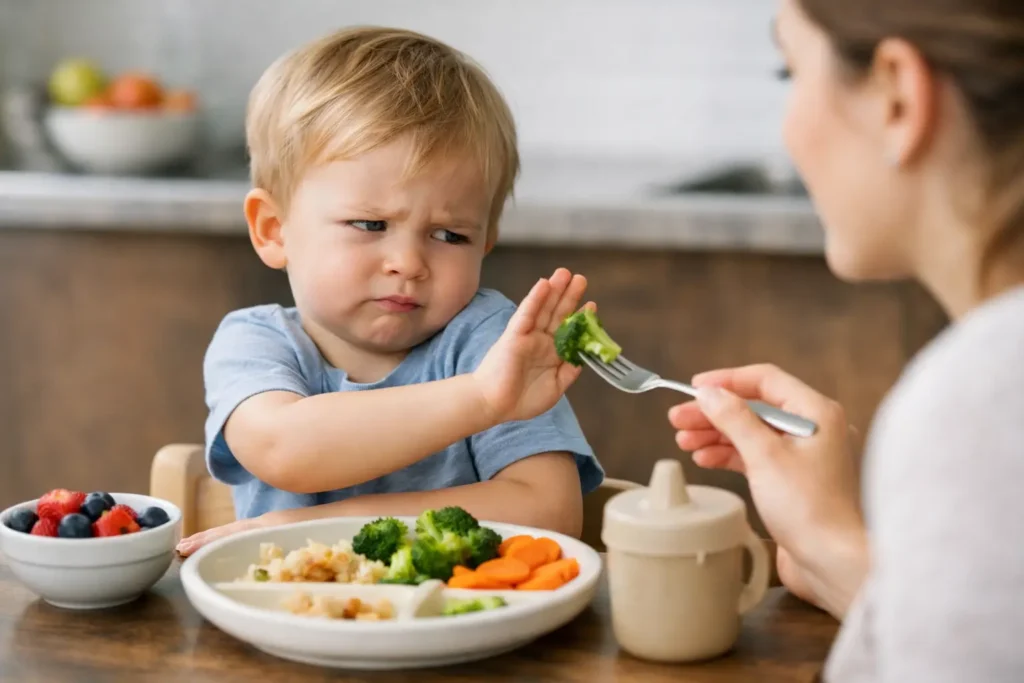
The broccoli is not the real enemy. For a toddler who is worried about unfamiliar tastes, smells, textures, or colors, one tiny green floret can feel like a very big ask. This toddler taste anxiety guide is for the parent who wants to help without turning every meal into a negotiation, a lecture, or a battle.
Taste anxiety can look like dramatic food refusal, but it is often a child’s attempt to stay safe with something unfamiliar. The good news is that safety can grow at the table, one small, playful experience at a time.
What toddler taste anxiety can look like
A toddler with taste anxiety may refuse food before it reaches their mouth. They might say “yucky” after seeing a new sauce, push away a plate because two foods are touching, or eat only one familiar brand prepared one familiar way. Some children are especially wary of crunchy textures, mixed meals, strong smells, or foods with a surprising temperature.
That does not automatically mean your child is being defiant. Toddlers are still learning how food feels, smells, and tastes. They are also learning that they have a voice. When dinner becomes a high-pressure moment, that voice can get louder.
Picky eating is common, especially between ages 2 and 8. Still, every child is different. A child who occasionally rejects new food needs a different approach than a child who is distressed around many foods, has trouble chewing or swallowing, is losing weight, or has a very limited range of accepted foods. In those cases, check in with your pediatrician or a qualified feeding professional.
The goal is comfort before bites
When a child feels nervous about a food, asking for a full bite right away can feel like asking them to jump into the deep end. A smaller goal gives them room to succeed.
Start by letting the food simply exist nearby. Your child can look at it, help put it on the plate, touch it with a fork, or smell it. Those moments count. They teach your child, “I can be around this food, and nothing bad happens.”
A taste may come later. It may take many calm exposures before it does. That is not failure or wasted effort. Familiarity is often the bridge between “no way” and “maybe.”
Try using language that keeps the pressure low. Instead of “Just take one bite,” you might say, “You do not have to eat it. It can sit on your plate while you eat your toast,” or, “Want to be a food explorer and give it a sniff?” Your calm voice matters as much as the food itself.
Keep a familiar food on the table
Serving one food your child usually accepts can make a new food feel less threatening. This is not catering to picky eating. It is creating a predictable starting point, so your child does not feel trapped or hungry at a meal filled with unknowns.
A familiar food might be bread, rice, berries, yogurt, or a favorite pasta shape. Pair it with a tiny portion of the less familiar item. Tiny is key. A large serving can look overwhelming, while one pea or one small shred of chicken feels possible.
Make curiosity the win
Toddlers learn through play. If a new food is presented as a test, they may resist. If it becomes something they can investigate, they have more control and more reason to engage.
Let your child be the helper sometimes. They can rinse strawberries, stir a bowl, choose between carrot coins and cucumber rounds, or place cheese cubes on a plate. A child who helped prepare a food may still decline to eat it, but they have already had a positive interaction with it.
You can also make ordinary food talk more fun. Is the pepper crunchy or squeaky? Does the mango smell sweet? Which food makes the loudest crunch? Keep the conversation light. The point is not to convince your child that they should like a food. It is to show that trying can be safe, interesting, and even silly.
Avoid disguising foods when you are working on taste anxiety. Blending vegetables into a sauce can be a helpful way to add variety to a meal, but secretly swapping ingredients can backfire if your child notices and feels tricked. Trust is part of the meal, too.
A toddler taste anxiety guide for less pressure
The most effective change may be what you stop doing. Bribes, threats, and bargaining can get a bite in the moment, but they often make the food feel even more loaded next time. “Three bites for dessert” teaches children that the food is a chore and dessert is the prize for surviving it.
Try to separate your job from your child’s job. You decide what food is offered, when the meal happens, and where everyone eats. Your child decides whether to eat and how much. That boundary is gentle, but it is powerful. It keeps you from becoming the bite police and gives your child a chance to listen to their own hunger and comfort signals.
There will be nights when your toddler eats two crackers and calls it dinner. That can be frustrating, especially after you cooked. Look at patterns over time rather than judging one meal. Appetite changes with growth, activity, sleep, illness, and plain old toddler unpredictability.
If a meal starts to slide into conflict, pause early. You can say, “Looks like we are done talking about food. You can keep eating what feels good to you.” Then move to a neutral topic. A peaceful table is more valuable than winning one bite.
Turn tiny bites into a playful challenge
Some children need a little extra motivation to move from looking to tasting. The trick is making that motivation feel joyful, not like a contract. A game can shift attention away from worry and toward a small, achievable mission.
Easy Eaters is built for exactly those everyday moments. Each bite reveals more of a fun image, building progress through simple visual surprises, badges, and celebrations. Rather than asking a child to finish a plate or eat a certain “healthy” food, it gives them a positive reason to practice a small bite at their own pace.
That distinction matters. A game should support a relaxed meal, not add another scoreboard. If your child is upset, tired, or clearly finished, let the game rest too. The goal is a happier relationship with food, not a perfect streak.
Keep the challenges small
For a child who is anxious about taste, “Try a new dinner” is too big. Choose a mission that feels almost easy: touch the avocado, lick a drop of dressing, or take a bite smaller than a pea. Celebrate the effort with warmth, even if the food comes right back out.
You can say, “You were brave enough to taste it,” rather than, “See? You liked it!” A child may not like it yet, and that is okay. Honest praise helps them trust their own experience while recognizing their courage.
Watch your own mealtime energy
Parents are allowed to feel disappointed, worried, and tired. Feeding a toddler can be exhausting when food is rejected night after night. But children are quick to sense tension. When every glance at the plate carries hope or frustration, new food can start to feel like a performance.
Give yourself a simpler definition of success. Maybe your child stayed at the table for ten calm minutes. Maybe they tolerated a new food beside their favorite food. Maybe nobody cried. Those are real wins, and they create the conditions for bigger wins later.
It also helps to avoid making separate replacement meals after every refusal. If there is at least one familiar option on the table, you can calmly end the meal when it is over and offer the next planned snack or meal later. This is different from withholding food. It is a predictable rhythm that lets food stay food instead of becoming an all-night argument.
When to ask for more support
Most selective eating phases improve with patient exposure and less pressure. But reach out for professional guidance if your child regularly coughs, gags, or chokes with food; seems in pain when eating; avoids entire texture groups; has poor growth; or becomes intensely distressed by meals. Your pediatrician can help you understand what is typical and whether additional support would be useful.
You do not have to solve taste anxiety in one dinner. Offer the food, lower the stakes, and notice the smallest sign of curiosity. A sniff today can become a lick next week, and one peaceful bite can make tomorrow’s meal feel a little lighter for everyone.