

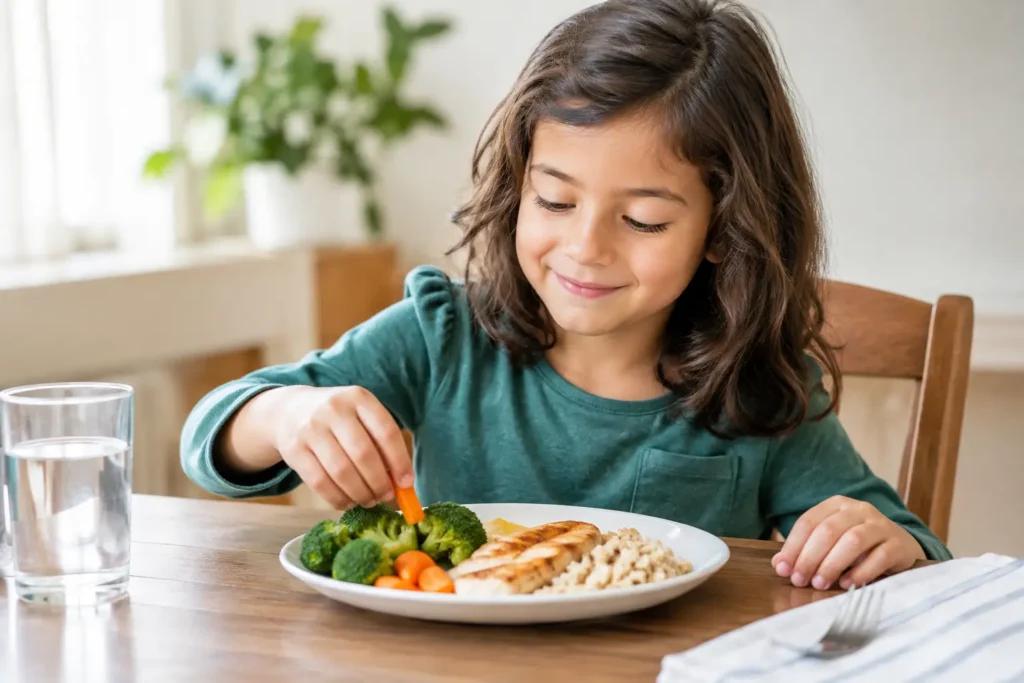
The plate hits the table, and your child immediately says, “I’m not eating that.” It can feel like dinner has already failed before anyone takes a bite. This child dinner autonomy guide offers a gentler reset: give your child a real role at the table without handing over the entire menu. Small, age-appropriate choices can turn a power struggle into a moment of cooperation.
Autonomy does not mean your child gets to request mac and cheese every night or skip dinner after one look. It means they get safe chances to participate, listen to their body, and build confidence around food. You stay the calm grown-up who decides what is offered and when. Your child gets room to decide how much they eat and how they engage.
Why dinner autonomy helps picky eaters
Kids ages 2 to 8 are learning independence everywhere. They want to pick their socks, push the elevator button, and pour their own water. Food is no different. When every bite becomes a command, even a perfectly normal meal can feel like something being done to them.
Giving a child a little control can lower the temperature fast. Instead of hearing “You have to eat three bites,” they might hear, “Would you like peas or cucumber with your chicken?” The food is still there. The family routine is still intact. But your child has a meaningful way to join in.
That difference matters. Pressure often makes unfamiliar foods feel bigger and scarier. A playful, low-pressure invitation gives kids the chance to look, touch, smell, lick, or take a tiny bite at their own pace. Those moments count as progress, even when the plate does not come back empty.
The child dinner autonomy guide: choices that actually work
The sweet spot is limited choice. Too many options can overwhelm a young child, create more negotiation, and leave you making three separate dinners. Offer two choices that you are genuinely comfortable with, then let your child decide.
At the grocery store, ask whether they want bananas or berries for the week. At dinner, let them choose the red plate or the blue plate, whether sauce goes on the side, or which vegetable joins a familiar food. If they are old enough, they can help rinse produce, stir a sauce, sprinkle cheese, or carry napkins to the table.
These choices may sound small because they are small. That is the point. Your child gets a sense of agency without becoming responsible for planning the meal. You avoid the exhausting trap of asking, “What do you want for dinner?” and then watching every answer change five minutes later.
A helpful family rhythm is this: you choose the meal, serving time, and eating location. Your child chooses whether to eat and how much. You can also invite them to choose their pace, as long as the meal stays within a reasonable, predictable window.
Keep one familiar food on the table
A familiar food is not a reward for rejecting everything else. It is a comfortable landing spot. Maybe it is bread, rice, fruit, cheese, or a simple favorite vegetable. Its presence tells your child, “There is something here you know how to eat.”
This can make new or less-loved foods feel less threatening. A child who fills up on the familiar item may not try the roasted carrots that night, and that is okay. Repeated, peaceful exposure is still doing its quiet work.
The trade-off is worth naming: if the familiar food is always a highly preferred snack food, your child may naturally focus only on that. Keep the safe food simple and part of the shared meal whenever possible. You are not creating a perfect plate. You are creating a table where everyone can breathe.
Let kids serve themselves, with support
A toddler may need you to hold the spoon with them. A preschooler might take one scoop of rice. An older child can choose a small or large portion and come back for more. Serving themselves gives kids practice noticing hunger, fullness, and what feels manageable.
Start tiny with foods they are unsure about. A single pea, one shredded piece of chicken, or a spoonful of soup is enough. Large portions can look like a challenge before a child has even begun.
If food gets dropped, scooped awkwardly, or mixed in a way you would not choose, try to let it be. Learning often looks messy. Save the correction for safety, not for whether the broccoli was placed in the “right” spot.
Make trying food feel playful, not pressured
A child does not need a lecture about vitamins to take one brave bite. They need a reason that feels immediate, encouraging, and fun. You can invite them to be a food detective: Is the pepper crunchy or soft? Is the yogurt tangy or sweet? Which pasta shape holds the most sauce?
Avoid turning play into a disguised demand. “Take a bite or you cannot see the next surprise” can still feel like pressure. Instead, celebrate participation with warmth. “You touched it. That was brave.” “You gave it a smell.” “You decided to try a tiny piece.”
Easy Eaters can fit naturally into this moment by turning each bite into a playful image reveal. Rather than bargaining with dessert or counting bites in a tense voice, children can watch their progress lead to a cheerful surprise. The goal is not to make them eat perfectly. It is to give a hesitant eater a positive reason to practice.
What to say when your child says no
You do not need the perfect script. You just need a calm one. If your child refuses dinner, try: “You do not have to eat it. It will stay on your plate if you change your mind.” That response keeps the door open without starting an argument.
If they ask for a different meal, you can say, “This is what we are having tonight. You can choose from the foods on the table.” If they are genuinely hungry later, your family may choose to offer a simple, consistent option rather than cooking a second dinner. What that option is depends on your household, but consistency matters more than making it exciting.
Try to skip labels like “picky,” “stubborn,” or “good eater” at the table. Kids absorb those stories quickly. A child who hears “You never eat vegetables” may start to believe that is simply who they are. Describe what is happening instead: “That zucchini is still new to you.”
When autonomy needs a boundary
Dinner autonomy is not a free pass for chaos. If your child is throwing food, leaving the table repeatedly, or demanding a different meal with every course, a calm boundary is kind. “Food stays on the table. If you are all done, you may be excused.”
It also helps to separate appetite from behavior. Children sometimes eat very little at dinner because they had a big afternoon snack, are tired, or are distracted by a busy day. That is different from a child who is regularly distressed by food, has trouble chewing or swallowing, is losing weight, or eats an extremely limited range of foods. In those cases, speak with your child’s pediatrician or a qualified feeding professional.
For most everyday picky eating, though, the answer is rarely more pressure. It is usually more predictability, more exposure, and a little more room for your child to participate.
Start with one choice tonight
You do not need a new meal plan, a color-coded chart, or a fridge full of unfamiliar ingredients. Start with one decision your child can safely make tonight: fork or spoon, peas or carrots, little scoop or big scoop. Then notice what changes when they feel included.
A peaceful dinner may not happen all at once. But one small choice, one tiny taste, and one less argument can be the beginning of a very different family routine.