

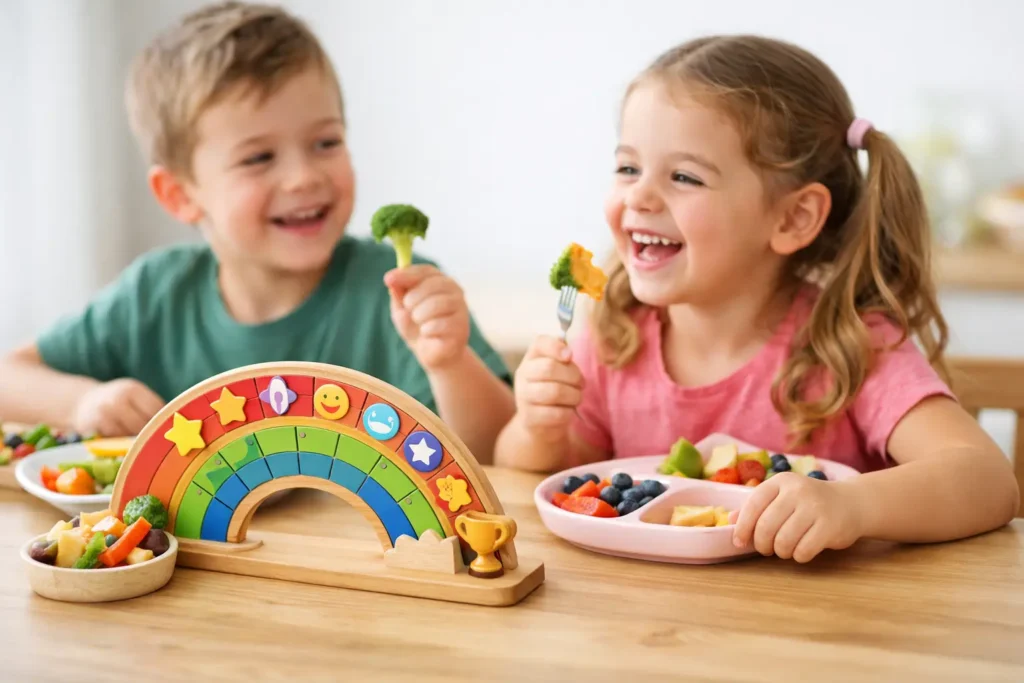
Dinner can fall apart over one tiny pea.
You made a meal everyone can eat. Your child liked this pasta last week. Then the fork gets pushed away, the negotiations begin, and suddenly you are counting bites, making promises, or wondering whether to offer something else. A kids eating progress tracker gives that difficult moment a new job: instead of proving that your child is eating enough, it makes each willing bite feel like a small, visible win.
That shift matters. For many picky eaters, the biggest hurdle is not hunger. It is uncertainty, control, unfamiliar texture, a tough day, or simply the pressure that starts building around the plate. A playful progress tracker keeps the focus on what your child can do right now: take a bite, see progress, and decide whether they want to keep going.
What is a kids eating progress tracker?
A kids eating progress tracker is a simple visual way for children to see their mealtime effort add up. Each bite, taste, or food exploration moment moves them closer to a fun goal, such as revealing a picture, earning a badge, or reaching a celebration.
It is not a calorie counter. It is not a chart that labels foods “good” or “bad.” And it should not become a scorecard used to pressure a child into cleaning their plate.
At its best, a tracker turns an abstract request – “just try one bite” – into something children can understand and enjoy. They can see that one small action changes the screen or moves the game forward. That immediate feedback is especially helpful for kids ages 2 to 8, who may not care about a future promise but love seeing a surprise appear right now.
Why progress works better than dinner negotiations
Parents are often asked to make mealtimes feel lower pressure, but that can sound impossible when your child has eaten three crackers since lunch. A progress tracker offers a practical middle ground. You still invite your child to participate, but you stop making the entire meal a test.
The goal becomes progress, not perfection.
A child who takes one bite of chicken may not suddenly love chicken. That is okay. One bite can still be a meaningful step for a child who normally refuses it. A child who smells a new food, touches it with a fork, or licks a sauce may be building familiarity before they are ready to eat more. Those steps deserve calm encouragement too.
This approach can reduce the cycle that makes dinner harder: parent worries, child feels watched, child resists, parent raises the stakes. When the energy changes from “You have to eat this” to “Want to see what happens after your next bite?” children often have more room to cooperate.
The kind of progress worth celebrating
Not every meal needs a big breakthrough. In fact, treating ordinary effort as success helps kids build confidence without feeling like they are under a spotlight.
A useful tracker celebrates trying, not finishing. It can recognize a bite of a familiar food on a difficult day, a first taste of something new, or a return to a food your child had previously rejected. The message is simple: you were brave, you gave it a go, and that counts.
Be thoughtful about what you track. If your child is overwhelmed by a full serving, set a small goal. If a brand-new food is causing anxiety, tracking a taste may be more realistic than tracking several bites. If your child already eats a wide range of foods but rushes through dinner, a short, playful bite goal can help keep them engaged.
The right goal depends on the child and the meal. Progress should feel achievable enough to invite participation, not so high that it creates another battle.
Keep the reward connected to the moment
There is a difference between a playful mealtime reward and a bargain that takes over dinner. “Eat five bites and you can have candy” can teach kids that the food is a hurdle they must suffer through. A visual reveal or a cheerful animation is different. It makes the act of participating more fun without turning dessert, screens, or toys into leverage.
That is why bite-based games can work so well. The reward is immediate, small, and built into the experience. Children get a little burst of excitement, while parents get a moment of cooperation that does not require a long negotiation.
How to use a progress tracker without adding pressure
Start before the meal gets tense. Let your child know there is a game available if they would like to play. Keep your voice light. This is an invitation, not a contract.
Then make the goal clear and small. You might say, “Each bite helps uncover the picture,” rather than, “You need to eat all of this.” That wording leaves room for your child to listen to their body while still making a positive choice.
Try not to narrate every bite. Kids can feel the difference between encouragement and being monitored. Let the tracker do some of the work. When your child makes progress, celebrate briefly: “You did it!” or “Look what you found!” Then return to normal family conversation.
If they say no, stay calm. You can leave the food on the plate, offer a familiar safe food alongside it, and move on. The tracker should never become a reason to argue. Its value comes from making willingness easier, not from forcing a result.
A simple mealtime rhythm that feels lighter
Many families find that a tracker works best as one part of a relaxed routine. Serve a meal with at least one food your child usually accepts. Include a small portion of any less familiar food so it does not feel overwhelming. Sit together when possible, and let the game be a cheerful option at the table.
If your child chooses to take a bite, mark the progress right away. If they do not, that does not mean the meal failed. They still saw the food, smelled it, and shared time at the table. Familiarity grows through repeated, low-pressure exposure.
It also helps to avoid making separate meals after every refusal. That can unintentionally teach children that waiting out dinner is the fastest route to a preferred option. Instead, keep the routine predictable and give them a comfortable amount of choice within the meal.
When a digital tracker makes sense
A paper chart can be fun, but it may lose its sparkle after a few meals. For families who need something quick at the table, a digital kids eating progress tracker can make the experience feel fresh without requiring extra prep from an already tired parent.
Easy Eaters is designed around that real-life moment. Children take bites to reveal images, collect badges, and enjoy little celebrations, while parents get a simple way to move away from nagging and toward encouragement. There are no complicated meal plans to follow and no need to turn your kitchen into a behavior chart headquarters.
The best tool is the one your family will actually use. If your child loves visual surprises, image reveals may be motivating. If they are competitive, they may enjoy reaching a badge. If screens tend to overstimulate them at dinner, a low-tech visual tracker may be a better fit. The point is not the format. It is creating a positive loop around trying.
Watch for progress beyond the plate
The first signs of success may be quieter than a suddenly empty bowl. Maybe your child stays at the table longer. Maybe they stop crying when a new food appears. Maybe they touch broccoli without immediately pushing it away. Maybe you notice that you are no longer pleading, bargaining, or feeling defeated before dinner even starts.
Those changes matter because peaceful repetition creates more chances for food confidence to grow. A child does not need to become an adventurous eater overnight. They need repeated experiences that tell them new foods are safe, manageable, and not a source of conflict.
Some children need more support, especially if eating is extremely limited, painful, tied to fear, or affecting growth. In those cases, a pediatrician or feeding specialist can help. A progress tracker can support everyday practice, but it is not meant to replace individualized care.
Tonight, choose a goal small enough that your child can win. One curious taste, one brave bite, one picture revealed. Then let that little win be enough for now.