

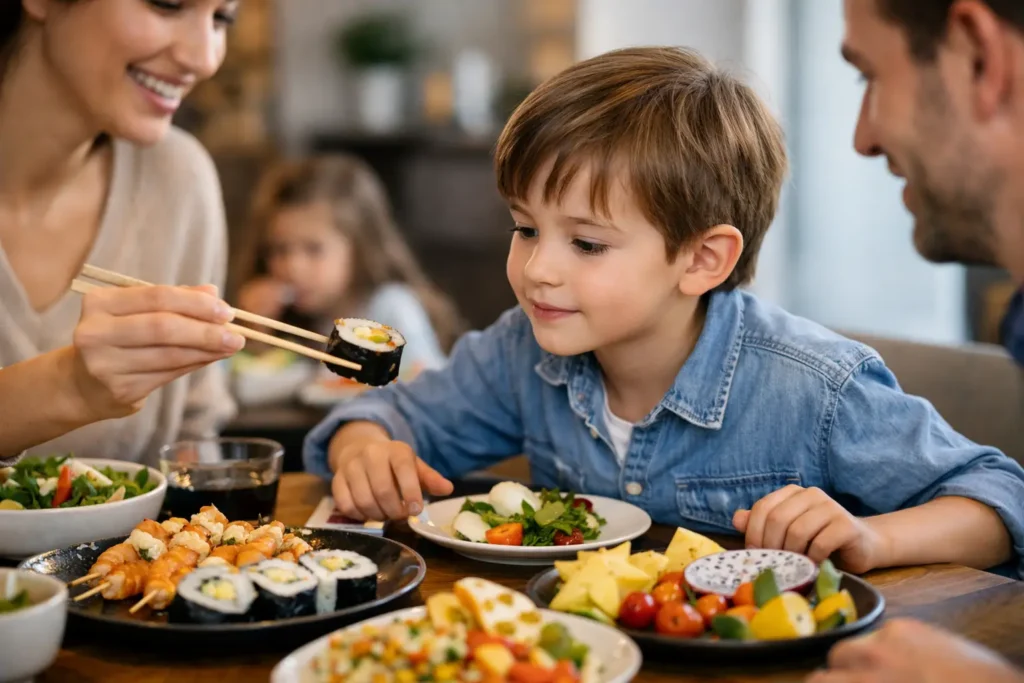
A strawberry touches the plate and your child instantly says, “No.” You have seen this movie before: the turned-up nose, the negotiation, the food that ends up untouched. It is exhausting, especially when you are trying so hard to serve something your child might enjoy. Learning how to encourage food curiosity can change the goal of dinner from “please eat this” to “let’s see what happens.”
Curiosity is smaller and gentler than liking a food. It might look like smelling a roasted carrot, tapping a blueberry with a finger, or taking one tiny taste before deciding they are done. Those moments count. When children feel safe to explore instead of pressured to perform, new foods become far less threatening.
Start With Curiosity, Not a Clean Plate
Picky eating is rarely solved by one perfect meal. Young children are still learning how foods look, smell, feel, and taste. A crunchy cucumber can be exciting one day and suspicious the next. That does not mean you are failing or that your child will never eat vegetables.
The most helpful shift is to take the spotlight off finishing. Rather than saying, “Just eat three bites,” try a lighter invitation: “This pepper is extra crunchy. Want to hear it crunch?” Or, “Which sauce should the chicken visit first?” The food is still there, but the moment feels like play instead of a test.
This does not mean your child gets to run the menu. You can still decide what food is served and when dinner happens. Your child can decide whether to interact with it and how much to eat. That balance gives parents structure while giving kids a little breathing room.
Make New Food Feel Familiar
A plate filled only with unfamiliar food can feel overwhelming, even for a child who is usually adventurous. Pairing one learning food with foods your child already accepts creates a softer landing. If buttered pasta is reliable, serve a small amount alongside a new turkey meatball or a few peas.
Keep the new food portion tiny. A full scoop can look like a demand. One pea, one thin slice of mango, or one small piece of fish says, “This is here if you want to check it out.” They can always ask for more.
It also helps to serve foods in ways that make sense to your child. Some kids prefer ingredients separated rather than mixed into a casserole. Others will try a food more willingly with a familiar dip. There is no prize for making dinner harder than it needs to be. The goal is exposure that feels manageable, not a picture-perfect plate.
Use playful language without disguising the food
Calling broccoli “tiny trees” can make a child smile, but avoid hiding vegetables or making food feel sneaky. Children deserve to know what they are eating. Instead, make the real food interesting: notice its color, compare textures, or give it a silly job.
You might say, “Can the orange carrot sit beside the green bean?” or “Do you think this avocado is squishy or slippery?” These are low-stakes questions with no wrong answer. Even a firm “slippery!” is engagement.
Let Kids Explore Before They Taste
Tasting is only one step in getting comfortable with food. Before a child puts something in their mouth, they may need to look at it, touch it, smell it, lick it, or take the tiniest nibble. Each step makes the next one feel more possible.
Try describing progress out loud without overdoing it: “You touched the kiwi. That was brave.” Keep your voice warm and matter-of-fact. If every tiny interaction gets a huge reaction, some kids feel watched and pull back. A calm smile and a simple acknowledgment can be more powerful than a big speech.
Food play can happen away from the pressure of dinner, too. Wash berries together, let your child tear lettuce, stir pancake batter, or arrange cucumber circles into a face. They do not have to eat while cooking. Being near a food, handling it, and seeing how it changes can build comfort over time.
How to Encourage Food Curiosity With Small Wins
Children are more likely to repeat an action when it feels achievable and rewarding. That is why small wins matter so much at the table. A bite does not need to be big to be meaningful. A child who once refused to let a food near their plate may be making real progress when they take a tiny taste.
Turn those moments into a simple game. Let your child choose a “food explorer” challenge, such as taking a smell, a lick, or one crunch. You can use a sticker chart if it feels fun for your family, but keep the reward focused on trying rather than on eating a certain amount. The message should be, “You can be proud of exploring,” not, “You have to earn dessert.”
Easy Eaters brings this same idea right to the dinner table by turning bites into playful progress. Kids reveal images, earn badges, and see celebrations as they try food, while parents get a calmer way to encourage participation without bargaining or force. For many families, a game gives children a reason to take that next small step when a parent’s request has started to feel like pressure.
The key is consistency. One playful meal will not erase a strong food preference, but repeated positive experiences can slowly change the story your child tells themselves about new foods.
Keep Your Reactions Steady
Your child is watching your face as closely as they are watching the plate. If you sigh, plead, threaten, or announce that they are being picky again, dinner can quickly become a power struggle. Nobody needs that at 6:15 p.m.
When they say no, try a neutral response: “Okay, you do not have to eat it. It can stay on the plate.” If they push the food away, you can set it nearby without making a scene. The food remains familiar, but the pressure leaves the room.
Praise effort rather than preference. “You tried a new flavor” is more useful than “Good job eating your broccoli.” The first celebrates courage. The second can sound like broccoli is something they must tolerate to make you happy.
Of course, there are nights when your child is tired, sick, overstimulated, or simply not hungry. Curiosity will not appear on command. On those nights, keep the meal simple and protect the peace. Long-term trust matters more than winning one bite.
Give Foods More Than One Chance
A child may need many calm exposures before a new food becomes familiar. That can feel frustrating when you are throwing away leftovers, but repetition does not have to mean serving a large portion every night. Rotate the food back in a few days later, in a different form if helpful.
For example, a child who rejects steamed sweet potato may be curious about roasted wedges, mashed sweet potato, or a small cube alongside chicken. The flavor is related, but the texture and presentation are different. Sometimes texture is the real hurdle, not taste.
Keep meals predictable where you can. Regular meal and snack times help children arrive at dinner with enough appetite to explore, without being ravenous and upset. Sitting together for even a short stretch can help, too. You do not need a flawless family dinner. Ten peaceful minutes is a meaningful start.
Save the Relationship, Not Just the Meal
The best mealtime tool is the one that helps your family feel more connected, not more controlled. If a strategy creates tears every night, it is okay to let it go. If playful challenges make your child lean in, use them. If offering foods separately lowers the temperature, that is a win.
Food curiosity grows best when children learn that the table is a safe place to notice, explore, and decide. Tonight, choose one tiny invitation: a new food beside a familiar one, a silly texture question, or a small bite turned into a celebration. You are not asking for perfection. You are making room for the next brave little try.